

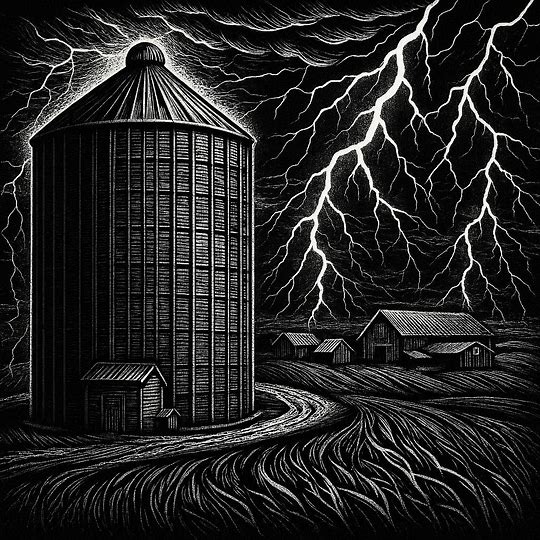
And He told them a parable, saying, “The land of a rich man was very productive. And he began reasoning to himself, saying, ‘What shall I do, since I have no place to store my crops?’ Then he said, ‘This is what I will do: I will tear down my barns and build larger ones, and there I will store all my grain and my goods. And I will say to my soul, “Soul, you have many goods laid up for many years to come; take your ease, eat, drink and be merry.”‘ But God said to him, ‘You fool! This very night your soul is required of you; and now who will own what you prepared?’ So is the one who stores up treasure for himself, and is not rich toward God.”
Luke 12:16-21
Introduction
It is easy to find ourselves lost in the resource management of life. Planning out our finances and ensuring we have adequate supply to do what we want is a good thing. In fact, it is something we are told to do throughout the Psalms, and as a principle it is compared to preparation for believing the gospel in Luke 14. But when we focus so singularly on how we personally manage our finances, it distracts us from the bigger picture, which is eternity.
The man and his wealth
In this parable, we see a man so preoccupied in accumulating wealth that he loses sight of why it is given. He falls so deep into the game of collecting that he has forgotten he only has a few short years on this earth with which to do something of lasting value. He only realizes when it is too late that his life was spent building wealth rather than using it. He did not use what was given to him wisely, and it was taken from him to be given to another. Know that this will inevitably happen to all of us. Nothing we have can be brought along past this life. It all stays behind to be used by another. Percy Shelley painted this picture well in his famous poem Ozymandias:
I met a traveller from an antique land,
Who said—“Two vast and trunkless legs of stone
Stand in the desert. . . . Near them, on the sand,
Half sunk a shattered visage lies, whose frown,
And wrinkled lip, and sneer of cold command,
Tell that its sculptor well those passions read
Which yet survive, stamped on these lifeless things,
The hand that mocked them, and the heart that fed;
And on the pedestal, these words appear:
My name is Ozymandias, King of Kings;
Look on my Works, ye Mighty, and despair!”
Nothing beside remains. Round the decay
Of that colossal Wreck, boundless and bare
The lone and level sands stretch far away.
Facing windfall
When God blesses you with more funds than you were expecting, what do you do? Do you celebrate and spend it? Do you consider yourself more responsible and save or invest it? Or do you feel it is more spiritual to give it away?
First, remember that every good gift you receive is from God (James 1:17), and that it is not yours to keep. In fundraising, when we thank a donor for giving a gift, it begins a phase we call “stewardship.” To steward something is to care for it as though it is yours while knowing it is actually someone else’s. That is why we steward a donor’s gift: because it was given by the rightful owner for a purpose they set out. The gifts we receive from God ought to be considered in the same light. When God gives us anything, He expects us to use it as He intends. While that will absolutely involve prayer and thoughtful consideration, we are also told throughout scripture what God expects from us. For example, in James 1:27 that “pure and undefiled religion before our God and Father is this: to visit orphans and widows in their affliction, and to keep oneself unstained by the world.”
Enduring hardship
On the other end of things we see where the rubber hits the road, so to speak. Or maybe where faith meets reality. It is one thing to talk about your faith, but it is quite another to live it. When you find yourself at a loss from where you were “supposed to be” or even in dire straits where it seems like you have plummetted from the peak of a mountain to the depths of a ravine, remember it wasn’t yours to begin with. All you have ever had, all you have, and all you will have belong to the Creator of all things. By giving it to you, He has entrusted His possession to you, His representative. When He takes those things away, He is still using them for your benefit and your good. Remember our Lord’s response to Satan in the wilderness when tempted to turn stones into bread: “It is written, ‘Man shall not live on bread alone, but by every word of God.’” (Luke 4:4, Matthew 4:4, Deuteronomy 8:3)
Your life does not derive itself from what you have, but from God alone. Draw from His word and be blessed. Rely on His provision, knowing your reward in heaven will be great.
May the Lord bless you and conform you into the image of His Son.


Leave a comment