

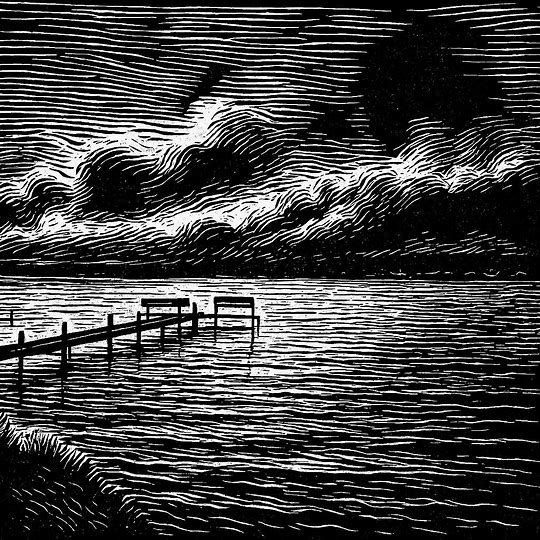
And it was now about the sixth hour, and darkness fell over the whole land until the ninth hour, because the sun was obscured. And the veil of the sanctuary was torn in two. And Jesus, crying out with a loud voice, said, “Father, into Your hands I commit My spirit.” Having said this, He breathed His last.
Luke 23:44-46
Introduction
When I was in high school, there was a class offered called “Biblical and Classical Literature.” It was a full year course with the first semester dedicated to Biblical literature (specifically Genesis and Luke) and the second to Classical (specifically the Odyssey). I distinctly remember reaching this moment in our reading of Luke when my teacher began her prepared lecture by confidently stating the torn veil was symbolic of the tear in Judaism which occurred at this time, separating those who believe Jesus to be the Messiah from those who believe otherwise. I responded as a new believer that it seemed like the tearing was more of a unifying factor given the veil’s location and importance than any sort of separation, which surprised my teacher. I did not have anything to back this up, given my status as a baby Christian who had barely read any scripture on my own by that point, but for anyone who has spent any amount of time in the scriptures, it is trivial.
In fact, this specific moment is referenced in Hebrews 10 when the author states the following in verses 19-22:
Therefore, brothers, since we have confidence to enter the holy places by the blood of Jesus, by a new and living way which He inaugurated for us through the veil, that is, His flesh, and since we have a great priest over the house of God, let us draw near with a sincere heart in full assurance of our faith, having our hearts sprinkled from an evil conscience and our bodies washed with pure water.
I emphasized the phrase “through the veil” which is then equated with Christ’s flesh which was torn for us on the cross. And in fact, according to this passage, they were torn simultaneously. What my high school teacher (and self) missed was the importance of the two events occurring at the same time, one giving significance to the other.
The holiness of God
Starting in Exodus 25, a very detailed set of instructions is passed from God to Moses as to how the tabernacle and later temple were to be constructed. In a series of walled off sections, this holy site was broken down by level of importance and otherness. At the very outer portion, all were welcome to enter and worship. This was called the court of the gentiles, and so, was available to even those who were not of the people of Israel but still wished to worship the One true God.
Then at the center of the complex was the Holy Place. And the center of the Holy Place was the Holy of Holies. This is where the Ark of the Covenant was kept, and the presence of the Lord dwelt with His people there. This gradual step into increasing holiness demonstrates just how holy God is – that is, how incredibly other and distinct He is from His creation.
And this Holy of Holies was so sacred and separated from the people that only one man was ever allowed to enter. On the Day of Atonement (Leviticus 16), the high priest would enter the Holy of Holies to present sacrifice for the sin of the people. That is it. The only time anyone on earth was permitted to enter into this space was the day when the sins of the people were forgiven.
Unity as salvation
Hebrews 10:4 teaches us that, “it is impossible for the blood of bulls and goats to take away sins.” And yet that is what the Day of Atonement was: a goat sacrifice. But that is because it was a precursor to the true day of atonement when the lamb of God would take away the sin of the world (John 1:29).
When Christ died, He paid the full penalty of our sin (1 John 2:2). It was our sin that separated us from God in His holiness (Isaiah 59:2). So by removing the sin, Christ has also removed the separation. Because we are forgiven, we are also made holy. And because we are united to Christ in baptism (Galatians 3:27), we are able to enter into holiness with Him (1 Peter 1:16).
It is very easy to get fixated on singular elements of salvation that we forget the fullness of it. Being saved from our sin is not merely bound up in forgiveness. If it was simple forgiveness, we would be like Adam and not like Christ. But being a Christian requires us to be like Christ (1 Corinthians 11:1). And salvation is not simply being made innocent, but it is being made righteous. And there is only One who is truly righteous, and that is Christ.
The tearing of the veil demonstrated the removal of the separation of God from man. Because of our sin, we were unable to enter into His presence. But because of Christ, we may not only enter into His presence, but be filled with His Spirit and enjoy union with Him forever. And that is so much greater than simply avoiding the penalty of Hell.
May the Lord bless you and conform you into the image of His Son.


Leave a Reply