

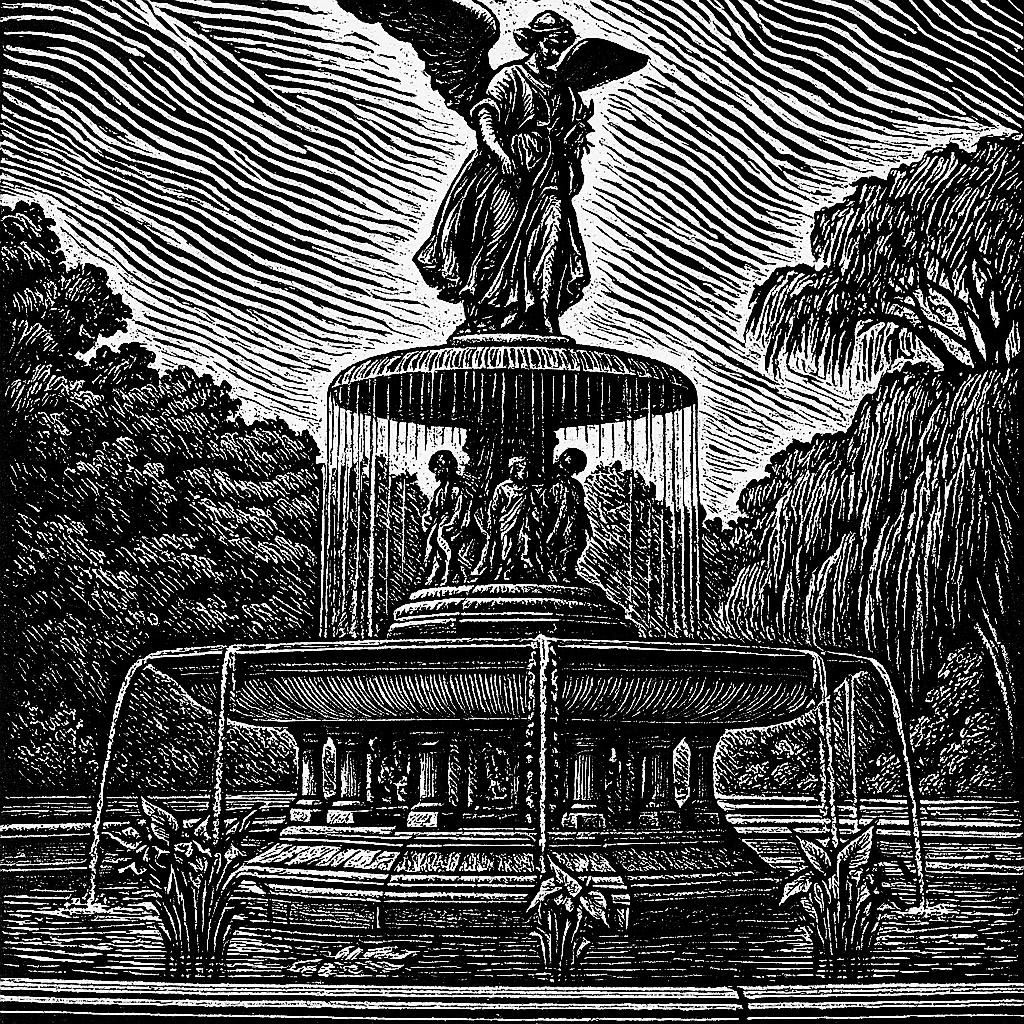
Now there is in Jerusalem by the sheep gate a pool, which is called in Hebrew Bethesda, having five porticoes. In these lay a multitude of those who were sick, blind, lame, and withered, waiting for the moving of the waters; for an angel of the Lord went down at certain seasons into the pool and stirred up the water; whoever then first, after the stirring up of the water, stepped in was made well from whatever sickness with which he was afflicted. And a man was there who had been sick for thirty-eight years. When Jesus saw him lying there and knew that he had already been sick a long time, He said to him, “Do you wish to get well?” The sick man answered Him, “Sir, I have no man to put me into the pool when the water is stirred up, but while I am coming, another steps down before me.” Jesus said to him, “Get up, pick up your mat and walk.” And immediately the man became well, and picked up his mat and began to walk.
John 5:2-9
Introduction
In 2010, I met my wife in New York City on a summer mission trip. A year later, I moved there in part to be near her. While living in the city, I did not make very much money, so the activities I did had to either be free or very inexpensive. This led me to develop a fond affection for Central Park, a massive oasis of green in the middle of one of the most densely packed urban environments in the world. And my favorite location in the park, right off 72nd street halfway through, is the Bethesda Fountain. It was built to commemorate the construction of the Croton Aqueduct which brought fresh water to New York City for the first time in 1842. Before this, the water found in the city was often dirty and contaminated with disease. This was the angel stirring the waters to bring health and prosperity into the city.
While a nice little story with a biblical tie in, it seems to miss the point in John’s retelling of this event. It almost makes the fountain the point of the story, as if an angel stirring up water is the miraculous wonder being performed here. As a matter of fact, the moving of the waters, as it was called, drew the hope of many away from God and toward this pool. Instead of praying for the healing only God can provide, the multitude who were sick, blind, lame, and withered looked to the waters for their hope of life anew.
Ad fontes!
During the Protestant Reformation, the reformers borrowed a very useful phrase from the Renaissance. That was “ad fontes,” which is Latin for “to the sources.” For the Renaissance Humanists, it was a return to the classical literature that helped to shape western civilization. But for the reformers, it was a call to return to the Holy Scriptures from which we inherit the very foundation of our faith. To them, it mattered less what a 13th century scholastic monk had to say about lofty spiritual matters, and more what God Himself had to say by way of His word.
And as we learn in John 1:14, the Word which is God became flesh in the man Jesus Christ. No better source exists than Him, and to Him we must look for our hope in anything at all.
Then, of course, we can see the happy coincidence that “fontes” gave us the English word “fountain,” the supposed subject of today’s scripture. While these sick and desperate people looked to a derivative fountain that collected its water from rain, the eternal fountain of living water stood in their midst. So when Jesus confronted this man who had been infirm and hopeless for thirty-eight years, He corrected the error that was happily playing out. He rightly made Himself the object of hope, comfort, and worship rather than a simple pool of water.
Where does your hope lie?
Over and over again in scripture, we see people’s faith wane as their eyes wander to vain and empty places to fix their hope. Idols (Genesis 31:24), gods (2 Kings 16:4), wealth (John 12:6), influence (2 Chronicles 18:7), power (Matthew 2:16): these are all areas we are still wont to place our hope today apart from God. Far from an exhaustive list, I could go on: family, being needed, alcohol, comfort, politics. As John Calvin once put it, “the human heart is a perpetual idol factory.” (Institutes I.11.8)
It does not take much to draw our gaze away from God as our only sure hope. Doing this in any degree is the sin of idolatry, though, and we ought to be aware of it when it happens. Thankfully, the Lord is patient and gracious with us, offering His Spirit to gently correct us and set our hearts straight. Consider, though, how easy it is for us to hope in something other than Christ and pray for a clean heart instead.
May the Lord bless you and conform you into the image of His Son.


Leave a Reply